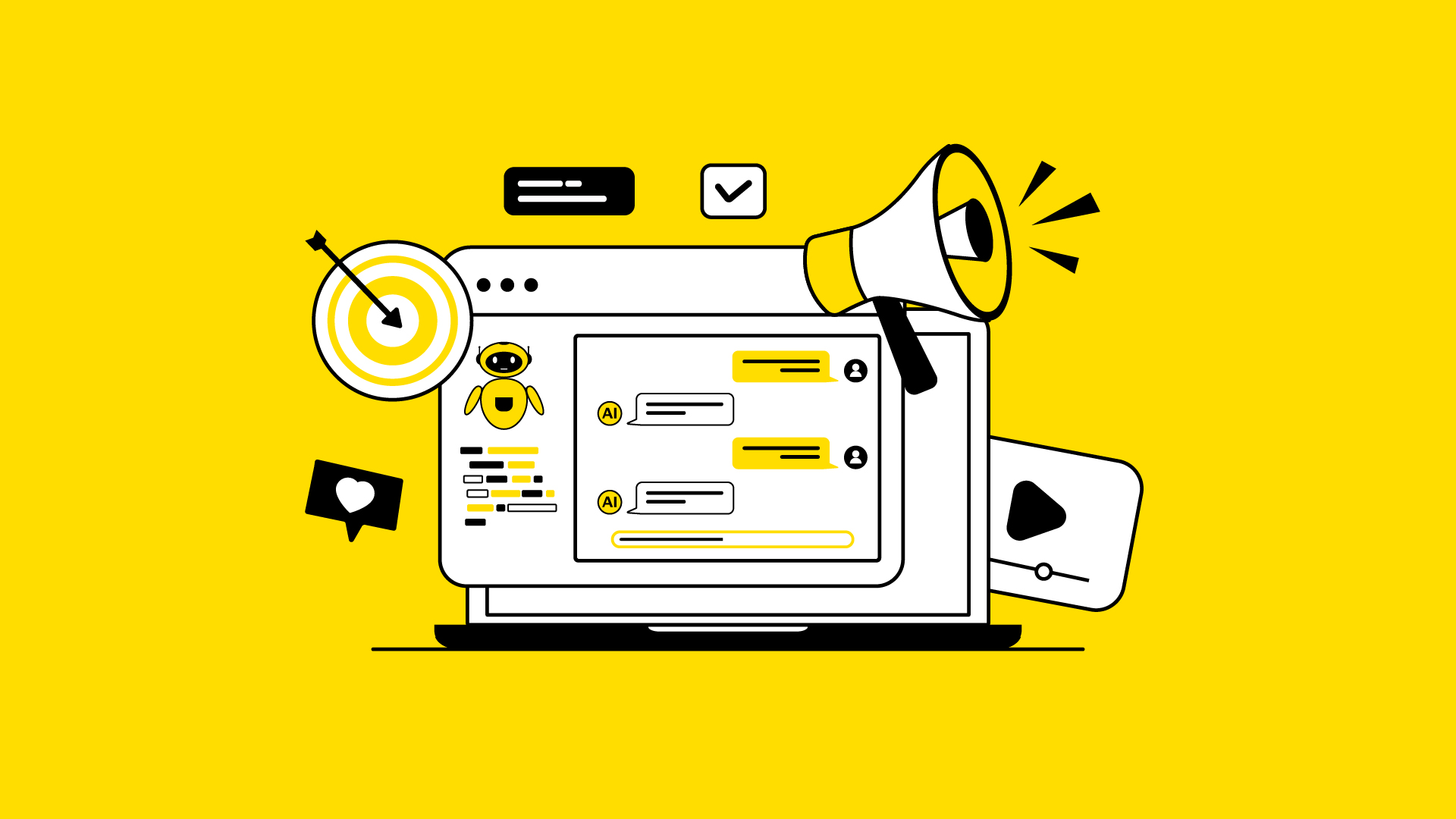

OpenAI recently confirmed that ChatGPT’s advertising business has reached a billion- dollar annualized run rate. Not over several years. In under 200 days.
Numbers like that tend to get shared around, admired briefly, and forgotten by lunchtime. This one is worth sitting with a little longer, because it says something about where customers actually are right now, not just about OpenAI&s balance sheet.
Smartfish Designs spends most of its working hours studying attention: where it goes, what pulls it, and how brands earn a share of it. Search results, Instagram feeds, WhatsApp broadcasts, now chatbots. So when a shift this size shows up, it’s less a piece of tech trivia and more a nudge to check whether client strategies still hold up.
The interesting detail isn’t the billion dollars. It&’s what OpenAI said sits behind it: roughly one in five weekly ChatGPT users shows what the company calls “commercial intent” during conversations.
People are no longer only asking ChatGPT to draft an email or explain a recipe. A large slice of them are asking what to buy, which brand is worth trusting, or how two options stack up against each other before they decide.
That’s a different kind of attention than a scroll through Instagram. Someone typing a direct question into a chat window has already leaned in. They’re not half-watching while doing something else. They want a specific answer, and more often now, an AI system is the one shaping that answer before a brand ever gets a chance to make its own case.
OpenAI has also expanded into more than thirty new markets and is reportedly aiming for $2.3 billion in ad revenue this year. This has stopped being an experiment. It’s a functioning advertising channel, built around a kind of customer behaviour most
marketing plans weren’t written for.
A creative branding agency in Ahmedabad can craft a distinctive identity that makes your business stand out in a crowded market.
A fair reaction from a business owner in Ahmedabad might be: this is happening somewhere else, to companies with ad budgets in a different league. Most local and regional businesses have no real reason to run a ChatGPT ad campaign next quarter, and there’s no rush to.
What does apply everywhere, at any budget, is the underlying behaviour. If a fifth of ChatGPT’s user base is already researching purchases inside a conversation, similar habits are almost certainly forming around Google’s AI Overviews, WhatsApp-based assistants, and every other AI layer now sitting between a customer and a business’s website.
Search has traditionally meant typing a query and picking from ten blue links. It’s increasingly meaning something else: asking a question and getting one AI-written answer back, sometimes naming a brand, sometimes not, often without sending any traffic to a website at all.
The question worth asking isn’t whether to advertise on ChatGPT. It’s simpler and a bit more uncomfortable: does a brand even show up correctly when an AI system gets asked about its category?
Agencies that chase every new platform the week it launches tend to spend client budgets on things that don’t last. This one gets watched rather than rushed into. A few things are worth doing regardless.
Brand information across the internet needs to be accurate and consistent — the Google Business Profile, the website’s own copy, reviews, social handles. AI systems compile answers from whatever is publicly available, and outdated or conflicting details don’t just confuse a human visitor anymore. They can be reason enough for an AI summary to leave a brand out entirely.
Search advertising and SEO still matter. Nothing here suggests Google is on its way out — it suggests there’s a new layer sitting on top of it. Businesses that treat AI visibility as one more thing to manage, alongside the fundamentals rather than instead of them, will handle this better than the ones that panic or the ones that ignore it entirely.
And it helps to actually try it. Open ChatGPT or Gemini, type in the kind of question a customer might ask, and see which brands come up and which don’t. It takes fifteen minutes and tends to reveal more about a brand’s current AI visibility than a formal audit would.
Ahmedabad’s business community has been through enough platform shifts to recognise the usual two reactions: rebuild everything overnight, or wait until there’s no choice left. Neither tends to serve a business particularly well.
A billion dollars in six months doesn’t mean customers have deserted Google or Instagram. It means another door has opened in how people find and judge brands, and the ones paying attention early will simply be further along when this becomes ordinary rather than new.
That’s worth a conversation with clients now, while there’s still time to act on it calmly.
Wondering how a brand currently shows up in AI-driven search and conversation? That’s the kind of audit Smartfish Designs runs for clients. Get in touch to take a look.

Since 2007, SmartFish Designs has helped brands across 20+ countries grow through branding, websites, digital marketing and AI SEO, led by founders with deep design and technology roots.
[vc_row][vc_column][vc_raw_html]JTNDaWZyYW1lJTIwd2lkdGglM0QlMjI2MDAlMjIlMjBoZWlnaHQlM0QlMjI4NTAlMjIlMjBzcmMlM0QlMjJodHRwcyUzQSUyRiUyRmVycC5zbWFydGZpc2guY28uaW4lMkZmb3JtcyUyRnRpY2tldCUyMiUyMGZyYW1lYm9yZGVyJTNEJTIyMCUyMiUyMGFsbG93ZnVsbHNjcmVlbiUzRSUzQyUyRmlmcmFtZSUzRSUwQQ==[/vc_raw_html][/vc_column][/vc_row]
We use cookies to improve your experience on our site. By using our site, you consent to cookies.
Websites store cookies to enhance functionality and personalise your experience. You can manage your preferences, but blocking some cookies may impact site performance and services.
Essential cookies enable basic functions and are necessary for the proper function of the website.
These cookies are used for managing login functionality on this website.
Statistics cookies collect information anonymously. This information helps us understand how visitors use our website.
Google Analytics is a powerful tool that tracks and analyzes website traffic for informed marketing decisions.
Service URL: policies.google.com (opens in a new window)
You can find more information in our Cookie Policy and .